Have you ever walked into a space and immediately felt more relaxed?
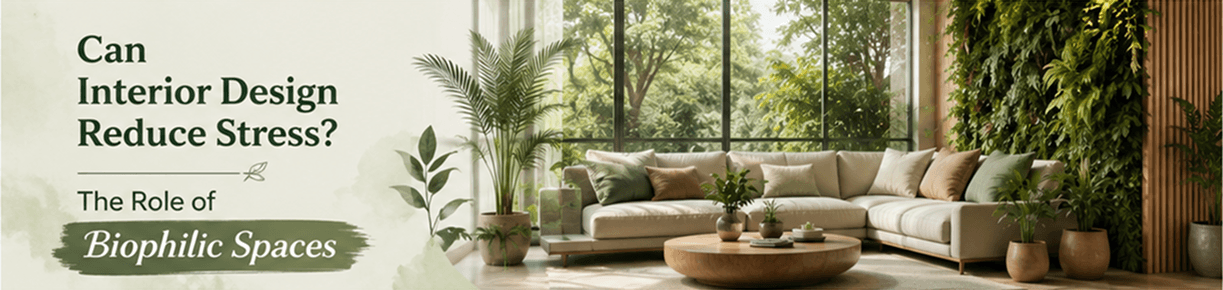
Maybe it was a living room flooded with natural light. Maybe it was a cafe filled with greenery and warm wooden finishes. Or perhaps it was an office that somehow felt calmer and more inviting than the typical workplace.
You probably didn't stop to think about why.
You just noticed how the space made you feel.
That's something designers have been paying close attention to in recent years. While interior design is often associated with aesthetics, the best spaces do much more than look beautiful. They influence our mood, energy levels, productivity, and even our stress levels.
This is where biophilic design comes in.
More than just a design trend, biophilic design focuses on strengthening our connection with nature through the spaces we live and work in. And in a world where many of us spend most of our time indoors, that connection is becoming more important than ever.
Think about how you feel when you're surrounded by nature.
A walk through a park.
Sitting under a tree.
Listening to rain through an open window.
Watching sunlight move across a room.
These experiences often create a sense of calm without us even realizing it.
Now compare that to spending hours in a dark, cluttered, artificially lit environment.
The difference is noticeable.
The spaces we spend time in affect us more than we often realize. They can influence our focus, our energy, our comfort, and ultimately how we feel throughout the day.
This understanding forms the foundation of biophilic design.
At its core, biophilic design is about bringing elements of nature into built environments.
But it's much more than simply adding a few plants to a room.
A well-designed biophilic space might incorporate:
The goal is to create spaces that feel more connected to the natural world, even when we're indoors.
If there's one feature that can instantly transform a space, it's natural light.
Have you ever noticed how a room feels completely different when sunlight fills it?
Natural light makes spaces feel larger, warmer, and more welcoming. It also changes throughout the day, creating a dynamic environment that feels alive rather than static.
Many homeowners focus on furniture, colors, and décor while overlooking the importance of daylight.
Yet some of the most comfortable homes are simply the ones that make the most of available natural light.
At Wallfabrica, we've often seen how strategic space planning, larger openings, and thoughtful window treatments can dramatically improve the atmosphere of a room without major structural changes.
Plants have become a common feature in modern interiors, but their popularity isn't just about aesthetics.
There's a reason people are naturally drawn to greenery.
Plants soften spaces.
They add color without overwhelming the design.
They create a sense of freshness and life that artificial elements often can't replicate.
Whether it's a statement indoor tree, a collection of smaller plants, or a vertical green wall, greenery can make a space feel calmer and more inviting.
Sometimes the smallest addition can completely change how a room feels.
Walk into a room filled with natural wood, stone, linen, and earthy textures, and you'll often notice an immediate sense of warmth.
Natural materials have a way of making interiors feel grounded and authentic.
Compare that to spaces dominated by glossy finishes, synthetic surfaces, and harsh materials.
While both can be visually appealing, they create very different emotional experiences.
Biophilic design often uses natural materials not because they're trendy, but because they help create environments that feel more comfortable and connected to nature.
One aspect of biophilic design that often gets overlooked is what happens beyond the walls.
A room with a view of trees, a garden, or even an open sky can feel dramatically different from one that feels enclosed and disconnected from the outdoors.
The same applies to ventilation.
Fresh air, cross-ventilation, and a sense of openness contribute significantly to comfort.
Many people don't consciously notice these elements, but they often notice when they're missing.
For homeowners, biophilic design doesn't require a complete renovation.
Simple changes can have a meaningful impact.
This might include:
The goal isn't to recreate a forest inside your home.
It's to create a space that feels more balanced, comfortable, and restorative.
The conversation around biophilic design is becoming increasingly important in offices and commercial spaces.
Many businesses are realizing that workplace design affects more than appearance.
It influences how people feel.
Employees spend a significant portion of their day indoors. Spaces that feel sterile, enclosed, or disconnected from nature can contribute to fatigue and reduced engagement.
That's why modern workplaces are incorporating:
The result is often a workspace that feels more inviting and supportive.
One of the biggest misconceptions about biophilic design is that it requires a large budget.
In reality, meaningful improvements can often come from relatively simple decisions.
A few plants.
Better access to daylight.
Natural textures.
Improved ventilation.
A stronger visual connection to the outdoors.
These changes may seem small individually, but together they can significantly improve how a space feels.
And when a space feels better, the people using it often do too.
But the most successful interiors do something deeper than that.
They influence how we experience our everyday lives.
Biophilic design reminds us that our connection to nature doesn't disappear just because we're indoors. By incorporating natural elements into homes, workplaces, cafes, and commercial spaces, designers can create environments that feel calmer, healthier, and more enjoyable to spend time in.
A well-designed space won't eliminate stress entirely.
But it can create an environment that helps people feel more comfortable, more focused, and more at ease.
And sometimes, that's exactly what modern living needs.
Over the years, we've noticed that the spaces people love most aren't always the most extravagant. They're often the ones that feel comfortable, welcoming, and effortlessly connected to the people who use them.
At Wallfabrica, we believe great interior design goes beyond aesthetics. Whether we're designing a home, a workspace, or a hospitality environment, our goal is always the same: to create spaces that not only look beautiful but also enhance the everyday experience of the people who spend time in them.