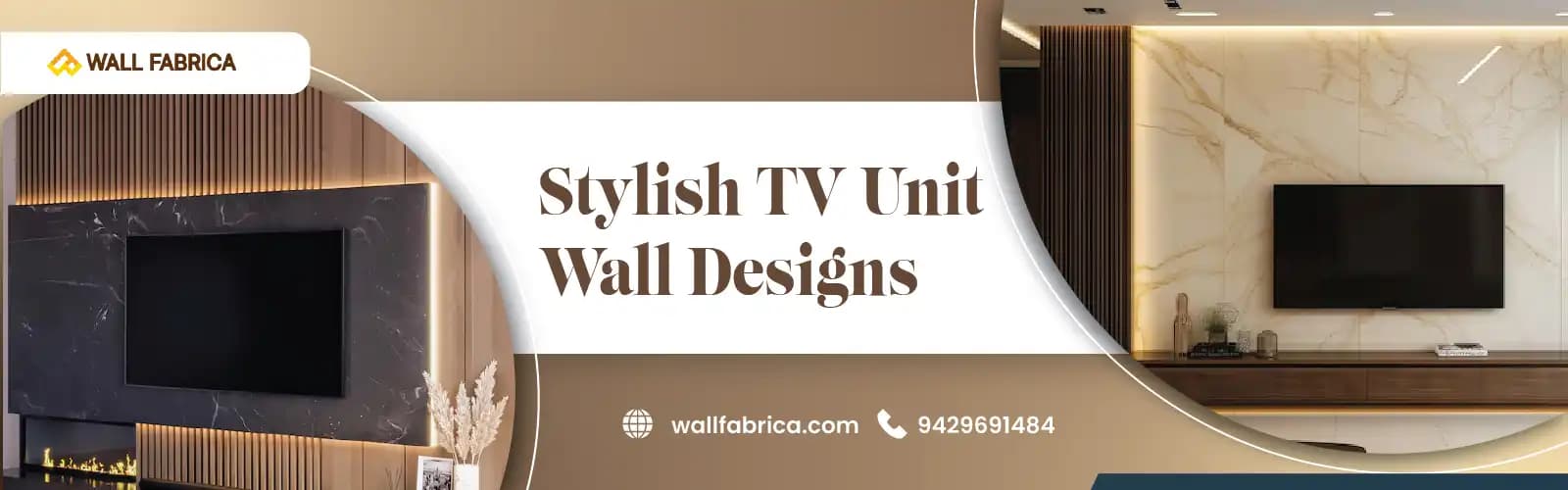

The TV wall is often one of the most visually important parts of an Indian living room. It is where the family gathers, where guests naturally look when they enter the room, and where furniture is often arranged around a single focal point.
That makes the TV wall more than a place to mount a screen. With the right panel, storage, lighting and proportions, it can become an organised part of the room's overall design.
The scale of television use in India also explains why this wall deserves attention. According to a 2025 PIB backgrounder from the Ministry of Information & Broadcasting, India has more than 230 million television households, reaching around 900 million viewers.
So, if the television is already a major part of everyday life, why not make the wall around it work harder?
Here are some TV unit wall panel ideas suited to contemporary Indian interiors.
Wood-inspired panels remain one of the easiest ways to make a TV wall feel warmer.
The natural appearance of wood works particularly well with neutral sofas, wooden furniture, indoor plants and warm lighting. It can also help visually connect the TV unit with other wooden elements in the room.
Try:
A recent Architectural Digest India feature on an Ahmedabad home shows how wood, stone and other tactile materials can be combined to create a warm but contemporary interior. The designers described the 1,200-square-foot home as balancing functionality, muted tones and tactile materials.
For a Bangalore, Ranchi or Bokaro home, a wood-look panel can bring a similar sense of warmth without making the wall visually heavy.
Marble-look panels can create a more polished appearance without requiring multiple decorative elements around the television.
For a contemporary Indian home, consider:
Keep the surrounding furniture relatively simple so that the wall remains the focal point.
This approach can work particularly well in living rooms where you want a refined appearance without using a lot of accessories.
A Bengaluru home featured by Architectural Digest India uses a marble-clad accent wall to frame the television, with display units integrated on either side.
If you want texture without a busy pattern, narrow linear or ribbed panels are a useful option.
They create depth through light and shadow rather than strong colours.
They work particularly well for:
This also connects with the broader direction of Indian interiors in 2026. Architectural Digest India's coverage of current design trends highlights a renewed interest in tactile materials, wood panelling and surfaces that add depth through materiality rather than excessive ornament.
If you like this restrained approach, our guide to Top Minimalist Wall Designs for Modern Homes has more ideas for using texture without overcrowding a room.
Sometimes the best TV wall is the quietest one.
A matte panel in beige, warm white, greige, soft grey or charcoal can create a clean background that allows the television and furniture to remain the focus.
Matte finishes are particularly useful when you don't want too many reflective surfaces competing with the screen.
Try a matte panel when:
The growing preference for calmer, warmer interiors is visible in recent Indian design coverage, with neutral palettes and understated materials increasingly being used to create spaces that feel comfortable rather than overly formal.
A TV wall doesn't have to be purely decorative.
A floating console can provide storage while keeping more of the floor visible. This can be particularly helpful in compact apartments where every bit of visual space matters.
Use the unit for:
Keep frequently used electronic equipment ventilated rather than completely enclosed.
Architectural Digest India has previously recommended wall-mounted TV cabinets, concealed storage, niches and open shelving as ways of keeping entertainment walls organised while making better use of limited floor space.
You don't always need one material across the entire wall.
A two-tone combination can create structure while keeping the design simple.
Some combinations to consider:
The trick is to give each material a clear role. One should usually dominate while the second acts as an accent.
This works especially well in larger living rooms where a single finish may feel too plain.
A thin frame can make the TV look more intentionally integrated into the wall.
You could use:
Avoid making the frame too thick. The idea is to define the television rather than turn it into an oversized decorative box.
This style can also help when the television is mounted on a large wall and needs some visual proportion around it.
Lighting can completely change the appearance of a TV wall after sunset.
A concealed LED strip behind the television or within the panel can create a soft halo around the screen and emphasise the texture of the wall.
Backlighting can work especially well with:
Architectural Digest India has long highlighted backlighting as an effective way to enhance a TV wall, including LED strips around the television or behind the back panel.
However, keep the light controlled. Very bright or colourful LEDs can compete with the television rather than complement it.
If you want storage but don't want a bulky entertainment unit, consider recessed niches.
A niche can hold:
This approach fits particularly well with the current Indian preference for integrating function into architecture.
A recent Mumbai apartment featured by Architectural Digest India uses a low, wall-mounted TV unit with storage carved into the wall as recessed niches. Designer Dhruv Rajkotwala described the principle simply: “keep the floor free, let the walls do the work.”
That idea is particularly relevant to compact Indian homes.
The TV wall shouldn't look like a separate object that was added after the rest of the interior was finished.
Instead, repeat one or two elements elsewhere in the room.
For example:
This creates continuity.
A recent Surat home featured by Architectural Digest India uses a wood-clad TV unit wall with metal strips inserted into the grooves, while the wider interior follows a restrained palette of wood, stone and metal.
Style Best Panel Texture
Warm and Cosy: Light wood
Modern and Clean: Matte white or beige
Refined Look: Marble or stone
High Depth: Ribbed or 3D panels
Minimal: Plain matte
Contemporary: Wood + matte combination
Dark and Dramatic: Charcoal or walnut
Natural: Stone or warm wood
There is no single TV wall design that works for every Indian home.
A compact apartment in Bangalore may benefit from a light-coloured panel, floating console and concealed storage. A larger home in Ranchi or Bokaro may have enough wall width for a combination of wood, niches and accent lighting.
The important thing is to consider the room size, natural light, furniture, viewing position and storage requirements together.
Indian interiors are also becoming more material-led. Recent Architectural Digest India coverage describes a growing preference for natural materials, tactile surfaces, warm neutrals and spaces where functionality is integrated rather than added as decoration.
A good TV wall does not need to be complicated.
Wood texture can add warmth. Marble can bring refinement. Ribbed panels can create depth. Matte finishes can keep the room calm. Floating storage can make a compact space feel less crowded, while subtle backlighting can give the wall a different character after dark.
The best TV unit wall design is the one that makes the television feel naturally integrated into the room rather than simply mounted onto it.
With the right panel texture, proportions, storage and lighting, even a simple TV wall can become one of the most considered parts of your home.