A plain painted wall can make a room feel finished, but sometimes it still feels like something is missing.
That is where wall panelling comes in.
Today, homeowners are paying much more attention to the texture, depth and character of their walls. Fluted surfaces, wood-look finishes, stone textures and decorative panelling are increasingly being used to make an otherwise ordinary wall part of the interior design itself.
PVC wall panels fit naturally into this shift. They can introduce texture without requiring a complete renovation, and they can be used in everything from TV walls and bedrooms to dining areas and home offices.
The trend also fits into the broader direction of interiors in 2026. Architectural Digest India’s overview of the biggest interior design trends for 2026 highlights a stronger focus on organic materials, tactility, visible texture and wood panelling, with interiors becoming more personal and lived-in.
For homeowners in Bangalore, Ranchi and Bokaro, this opens up plenty of possibilities.
But the interesting question isn't simply which PVC panel is trending.
It is how to use one well.
PVC wall panels are decorative panels made from polyvinyl chloride and designed to be installed over interior wall surfaces. They are available in a wide variety of colours, textures, patterns and finishes.
Depending on the design, a PVC panel can imitate the appearance of wood, stone, marble or other textured surfaces.
Their appeal is fairly straightforward: they allow homeowners to introduce visual depth and a finished appearance without relying entirely on paint or traditional wall treatments.
They are particularly useful when you want one wall to become a visual feature without redesigning the entire room.
If you want to know what the difference is between PVC panels, paint, and wallpapers, read our article PVC Wall Panels vs Wallpaper vs Paint: Full Comparison.
The popularity of wall panels is not just about appearance.
Modern homeowners are looking for interiors that are easier to maintain, visually interesting and adaptable to different rooms. PVC panels can offer a practical alternative to some traditional decorative wall treatments, particularly when moisture resistance and easy maintenance are important considerations.
But there is another reason they work so well in contemporary interiors: texture.
A flat painted wall reflects light fairly evenly. A fluted or textured panel creates small variations of light and shadow, giving the wall more depth.
That is why even a relatively simple panel can make a room feel more designed.
Fluted panels remain one of the easiest ways to introduce texture without making a room visually complicated.
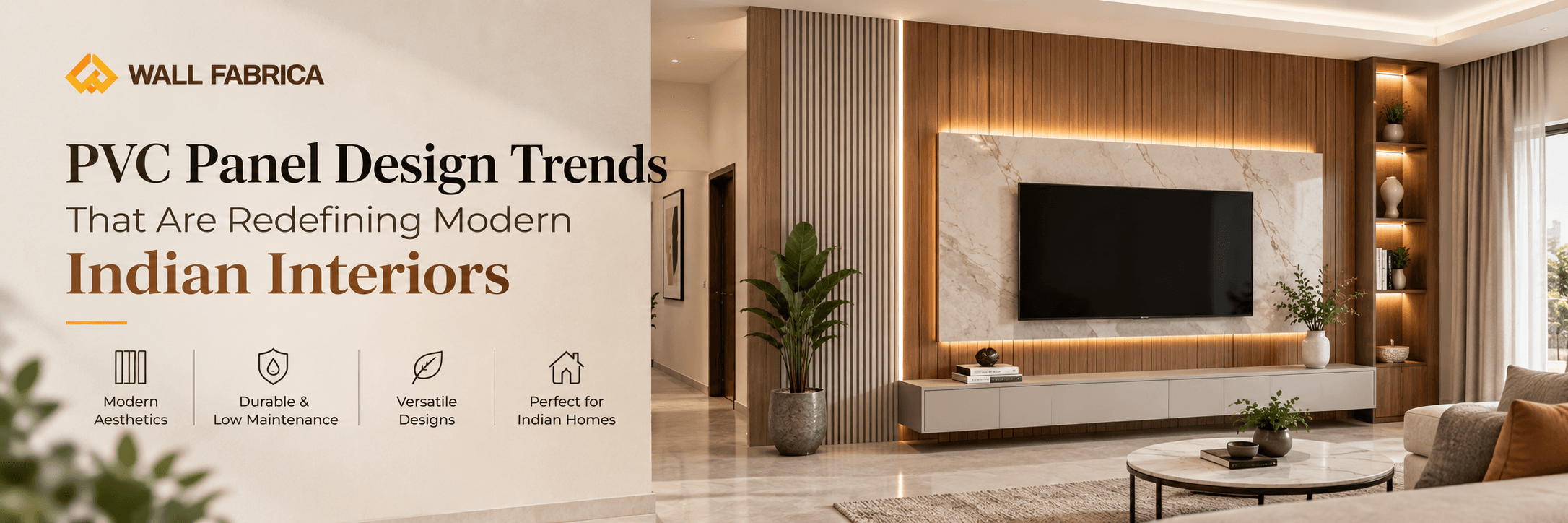
The vertical grooves create rhythm and shadow while maintaining a relatively clean appearance. They work particularly well behind television units, beds, sofas, consoles and dining areas.
HomeLane’s guide to fluted panel walls in Indian homes also points out that fluted panels add texture and visual interest, while recommending that homeowners avoid using them on too many walls.
That is an important point.
A fluted panel works best when it has somewhere to stand out.
A full-height fluted TV wall can become the main feature of a living room. In a bedroom, the same treatment behind the bed can act almost like an extended headboard.
You do not necessarily need additional decoration around it.
Wood-look PVC panels are moving beyond the darker, highly polished finishes that were once common in contemporary interiors.
Warmer oak, walnut, natural woodgrain and muted brown tones work particularly well with today's preference for comfortable, less formal interiors.
This connects with the wider 2026 design direction identified by Architectural Digest India, which highlights the return of wood as an architectural surface and a stronger appreciation for natural texture.
For Bangalore homes, a warm wood-look panel can work especially well with beige walls, indoor plants, linen upholstery and soft lighting.
In Ranchi or Bokaro, the same palette can be paired with earthy colours, warm whites and natural-looking furniture for a more grounded family-home aesthetic.
High-gloss interiors can certainly look dramatic, but they are not always easy to live with.
Fingerprints, reflections and visible dust can make glossy surfaces demanding to maintain.
Matte PVC panels, on the other hand, tend to create a quieter appearance.
Soft beige, taupe, warm grey, muted brown and charcoal can make textured panels feel more sophisticated without dominating the room.
The idea is not that gloss has disappeared. Rather, homeowners have more reasons to consider finishes that feel softer and more understated.
Stone and marble-inspired panels can create a premium look without covering every surface in natural stone.
They work particularly well when used selectively.
A marble-look panel behind a console, for example, can create a sophisticated entrance. A subtle stone texture behind a television can give a living room a stronger architectural character.
The key is restraint.
If the panel already has strong veining or pattern, keep the surrounding furniture and wall colours relatively quiet.
The result feels intentional rather than decorative for the sake of decoration.
Not every homeowner wants a natural or minimalist interior.
For entertainment rooms, home offices, creative spaces and contemporary living rooms, geometric PVC panels can provide more personality.
Diagonal patterns, repeated shapes, raised surfaces and three-dimensional designs can turn a plain wall into a statement feature.
These designs work best when the rest of the room is relatively simple.
A complicated wall combined with complicated furniture, patterned curtains and multiple decorative elements can quickly become overwhelming.
One of the strongest directions in contemporary interiors is the move towards warmer, nature-inspired colours.
Think:
This is particularly relevant to Bangalore.
HomeLane's 2026 Bengaluru interior trends guide describes the city's interiors as moving towards earthy minimalism and warmer, lived-in spaces, including greater use of textured walls and natural-looking materials.
PVC panels can follow the same direction through woodgrain finishes, subtle stone textures and muted colours.
The living room is probably the most obvious place for a PVC feature wall.
A fluted panel behind the TV is a classic option, but it is not the only one.
You can also use:
The important thing is to decide what the focal point of the room should be before choosing the panel.
In bedrooms, PVC panels work particularly well behind the bed.
A warm woodgrain panel can create a softer atmosphere, while a darker fluted panel can give the room a more dramatic appearance.
You can also use a panel only within the width of the bed rather than covering the entire wall.
Add warm bedside lighting and the grooves will naturally create shadows across the surface.
The dining area is often overlooked when homeowners plan wall treatments.
A textured PVC panel behind the dining table can give the area its own identity without requiring extensive decoration.
A wood-look panel paired with a mirror, pendant light or simple artwork can work particularly well.
A home office does not need to look corporate.
A subtle fluted panel behind the desk can provide texture while keeping the background visually clean.
For video calls, neutral woodgrain, beige or muted grey panels are generally easier to work with than very busy patterns.
The entrance is one place where a smaller panel can have a surprisingly large impact.
A narrow fluted panel beside a console, a stone-look surface behind a mirror or a woodgrain accent can make the entryway feel designed rather than simply furnished.
Bangalore interiors have their own character.
There is a natural opportunity to combine contemporary design with warmer materials and greenery, rather than creating spaces that feel overly polished.
That is why wood-look PVC panels, earthy fluted finishes and muted textured surfaces work well with the city's current interior direction.
For an apartment in HSR Layout, for example, a full-height fluted TV wall in warm oak can add depth without requiring too many additional decorative elements.
In a larger independent home, the same material could be used more selectively on a staircase wall, dining area or bedroom.
The idea is not to make every wall look the same.
It is to give each important space a clear visual purpose.
The preference for decorative wall treatments is also becoming more visible in Jharkhand.
A 2025 Hindustan report on home décor trends in Ranchi highlighted the growing popularity of louvers, wainscoting and mirror décor in local homes. The report also notes that louvers are being made using materials including wood, metal and PVC and are being used for TV units, partitions, balconies, walls and ceilings.
That makes fluted and linear PVC designs particularly relevant for Ranchi homeowners.
For Ranchi and Bokaro homes, some combinations worth considering are:
These approaches can create a contemporary look without making the home feel disconnected from its surroundings.
Usually, you don't have to.
One of the most common mistakes with wall panelling is assuming that more panels automatically mean a better interior.
They don't.
HomeLane's fluted-panel design guide specifically recommends using a single feature wall in many situations rather than overusing panels.
This is also useful from a budgeting perspective.
The same HomeLane guide places fluted wall panel installations broadly at around ₹250–₹1,200 per sq ft in India, depending on material, finish and detailing. This should be treated only as an indicative range, not a project quotation.
For many homeowners, covering one important wall well can therefore make more sense than trying to panel an entire room.
A panel does not have to exist by itself.
In fact, some of the most successful interiors combine panels with ordinary painted walls.
For example:
Fluted wood-look panel + warm beige paint + soft lighting
creates a very different atmosphere from:
Dark fluted panel + charcoal paint + dramatic lighting.
Similarly, combining a wood-look panel with stone, marble, metal or glass can create contrast.
The trick is to give each material a role.
If the panel is already highly textured, let the surrounding materials be quieter.
Lighting can completely change how a wall panel looks.
The grooves of a fluted panel become more noticeable when light falls across them from the side.
Warm LED strips, wall lights or carefully positioned spotlights can emphasise the texture.
But lighting should not be added as an afterthought.
Ideally, the panel design and lighting plan should be considered together.
A beautiful textured wall under flat, poorly positioned lighting can end up looking surprisingly ordinary.
This removes the feature-wall effect and can make a room feel visually crowded.
Colours and textures can look very different under your home's actual lighting.
A very strong geometric pattern may overwhelm a small room, while a tiny pattern may disappear on a large wall.
Material selection should consider moisture, ventilation, maintenance and the specific room.
TV walls need careful planning for sockets, cables, lighting and mounted equipment before the panels are installed.
Texture needs light to be properly appreciated.
There is no single PVC panel design that works for every home.
A compact Bangalore apartment might benefit from a light-coloured fluted wall that adds verticality without making the room feel heavy.
A larger Ranchi home might suit a warmer woodgrain panel combined with earthy paint and furniture.
A Bokaro family home might benefit from a simpler half-wall treatment rather than a full-height decorative wall.
The right choice depends on the room, natural light, furniture, ceiling height, colour palette and how much visual detail the space already contains.
That is why choosing the panel should come after understanding the room, not before.
At Wallfabrica Construction and Interior, we see wall panels as one element of a larger interior.
The goal isn't to make every wall look expensive.
The goal is to make the right wall feel intentional.
Whether you are renovating an apartment in Bangalore, updating a family home in Ranchi or designing a new interior in Bokaro, PVC panels can provide a practical way to introduce texture, warmth and character.
The most successful designs are often the simplest ones: one strong wall, a considered colour palette, good lighting and materials that complement the rest of the home.
Because a wall should not just follow a trend.
It should belong to the home.